The Future of Generative AI in Content Creation
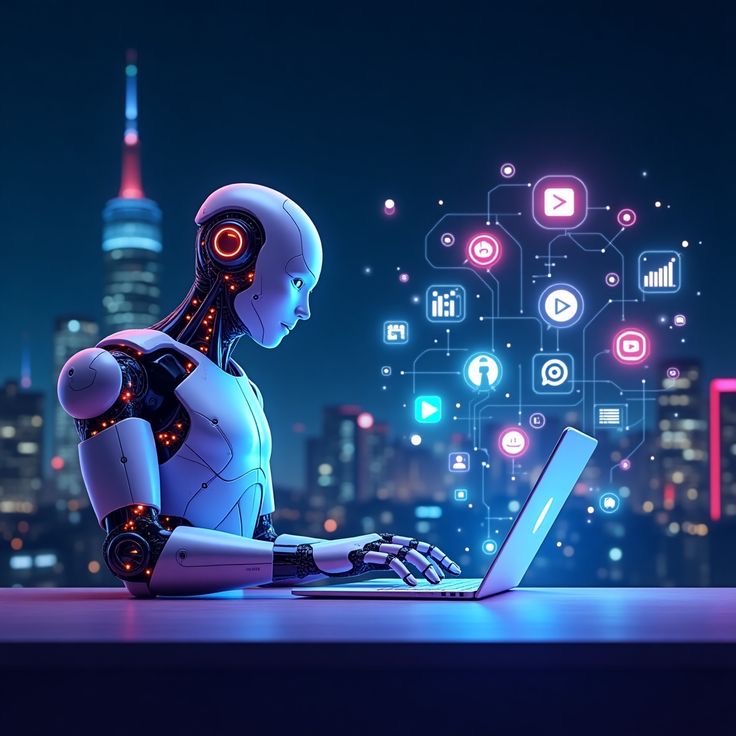
Generative AI has already changed how we create, distribute, and consume content. From AI-written articles to AI-generated videos, designs, voiceovers, and full marketing campaigns, the digital landscape is undergoing a significant transformation. As we move into 2026 and onward, generative AI is evolving from a tool to a creative partner, a production engine, and a strategic assistant. The future of content creation will not rely only on human creativity or artificial intelligence. Instead, it will thrive on a strong collaboration between the two. This article examines the future of generative AI in content creation, its evolution, the opportunities it presents, the challenges it faces, and the new creative world it is shaping.
1. From Automation to Co-Creation: A New Era of Content Production The earliest generative AI systems handled basic tasks such as simple copywriting, image generation, or basic text-to-video tools. Today’s systems are much more capable. They grasp context, follow brand voices, and create content in different formats with greater creative depth. In the future, generative AI systems will operate not just as tools that carry out commands but as co-creators: They will suggest content ideas based on market trends. They will assist writers in expanding or refining concepts. They will produce multiple versions of creative work for experimentation. They will recognize the emotional tone, style, and voice needed for audiences. They will aid in developing storytelling arcs and narrative structures. Human creators will transition from producing every word, image, or frame to orchestrating the creative process, making strategic and emotional decisions while AI handles execution and variation.
2. Multimodal AI Will Dominate the Creative Industry One of the biggest shifts in generative AI is the emergence of multimodal systems, which can understand and generate various content formats at once, including text, images, video, audio, and interactive elements. In the near future, content creators will use AI systems capable of producing: – Blog articles – Social media posts – Video scripts – Short-form videos – Photos and graphic designs – Voiceovers with customizable tone – Interactive web content – Entire marketing campaigns —all from a single starting idea. Imagine entering a topic like “The Future of Digital Marketing,” and AI instantly generating: – A polished long-form blog article – A YouTube script – A short-form TikTok or Instagram reel – A set of infographics and thumbnails – A podcast-style voice narration – Ten social media posts promoting the content This level of automation will redefine the speed and scale of content production.
3. Personalized Content at a Scale Never Seen Before Generative AI allows for something humans alone can’t do: create personalized content for millions simultaneously. Future content creation will be adaptive and dynamic: Websites will adjust their content based on user behavior. Video ads will automatically alter scenes based on viewer interests. Emails will be crafted uniquely for each subscriber with personalized tone, offers, and topics. Blog content will change structure and complexity depending on whether the reader is a beginner or expert. Generative AI will essentially create content that feels handcrafted for each person who consumes it. This level of personalization will revolutionize marketing, education, entertainment, and customer experience.
4. AI Storytelling Will Reach Cinematic Levels As generative video and 3D rendering models improve, AI will soon be able to: – Generate realistic animated characters – Produce CGI-level scenes – Create short films or ads based on text prompts – Deliver fully edited video content in minutes – Build interactive story experiences AI won’t just write stories; it will visualize them. Creators will be able to produce high-quality content without needing expensive cameras, editing software, or large production teams. This democratizes creativity, enabling small creators to compete with industry giants.
5. A New Job Role: AI-Enhanced Creative Professionals As generative AI evolves, new roles will appear, such as: – AI Creative Director Guides AI systems to produce content aligned with brand voice, emotion, and storytelling. – Prompt Strategist Experts at converting ideas into prompts that yield high-quality AI outputs. – AI Content Editor Ensures AI-created content matches human tone, authenticity, and brand requirements. – AI Workflow Designer Builds pipelines for content teams to integrate AI into production processes. – Ethical AI Reviewer Monitors content for bias, misinformation, and inappropriate generation. Rather than replacing jobs, AI shifts them into smarter, more strategic roles where human oversight remains crucial.
6. Ultra-Fast Content Creation Will Change Marketing Speed AI already speeds up production, but future systems will enhance content speed dramatically. Brands will be able to create: – Entire campaigns in hours – High-quality videos in minutes – Dozens of A/B variations instantly – Live content that adapts to trends the moment they occur Marketing cycles will transition from weekly or monthly to real-time creation, making brands more responsive and adaptable. Creators who know how to use fast AI content workflows will advance much quicker than competitors.
7. Data-Driven Creativity: AI Will Predict What Content Performs Best Generative AI will soon integrate closely with performance analytics. Instead of guessing what works, AI will: – Analyze audience behavior – Predict which content topics will trend – Suggest keywords and SEO structures – Recommend the ideal style, tone, and length – Create multiple variations and test them – Automatically improve based on performance data Content creation will become a feedback loop driven by real-time insights. This shift from intuition to prediction will greatly enhance content ROI.
8. Ethical & Creative Challenges Will Grow As powerful as generative AI is, it also raises concerns that need attention. 1. Authenticity Too much AI automation may lead to content that feels generic or emotionally flat. Audiences still crave human stories. 2. Deepfakes & Misinformation Advanced AI can generate hyper-realistic fake videos or misleading content. 3. Ownership Who owns AI-generated content? The user? The platform? The model? This remains legally unclear. 4. Originality Generative AI learns from existing works, raising questions about originality and intellectual property. 5. Bias If training data is biased, AI-generated content may unintentionally reinforce stereotypes. 6. Overreliance Creators who depend entirely on AI may ignore developing their own creativity and critical thinking skills. The future must balance innovation with responsibility. AI should support creativity, not control it.
9. AI and Human Creativity Will Blend—Not Compete The mistaken belief that AI will replace creators is fading. What’s happening is much more complex: AI can generate drafts, but humans refine them. AI can produce ideas, but humans assess their emotional impact. AI can speed up production, but humans provide meaning and storytelling. AI can analyze data, but humans contribute intuition. The future belongs to creators who see AI as a collaborative partner instead of a competitor. The most powerful creative work will come from merging: – Human imagination – Human emotion – Ethical judgment – Cultural understanding – Personal experience with AI’s: – Speed – Scalability – Predictive intelligence – Multimodal abilities – Optimization power Together, they form a creative superteam.
10. A New Creative Ecosystem Will Emerge By 2026 and beyond, content creation will enter a new ecosystem where: – Small creators compete with big studios – Businesses produce content daily, not weekly – Every consumer becomes a potential creator – AI-powered creative marketplaces emerge – Brands depend on AI to interact with customers in real-time Content will become more interactive, personalized, and immersive. AI systems will be able to: – Build virtual influencers – Generate music tailored to mood – Create personalized educational content – Develop interactive games and learning modules – Produce multilingual content in seconds – Generate 3D product models for e-commerce In short, generative AI will unlock creativity that was once impossible. Conclusion:
The Future Is AI-Augmented Creativity The future of generative AI in content creation is not about replacing humans; it’s about empowering them. We are entering a world where creativity is limitless, production is instantaneous, and content becomes personal, immersive, and deeply integrated into daily life. Generative AI will: – Transform storytelling – Speed up content production – Personalize experiences – Predict trends – Enable small creators to reach global audiences – Expand human imagination – Shift marketing to real-time – Create new careers and opportunities But humans will still guide the emotional, strategic, and ethical core of content. The next era of content creation will blend AI’s intelligence with human creativity—a partnership that will shape the digital world in ways we’re only starting to understand.